
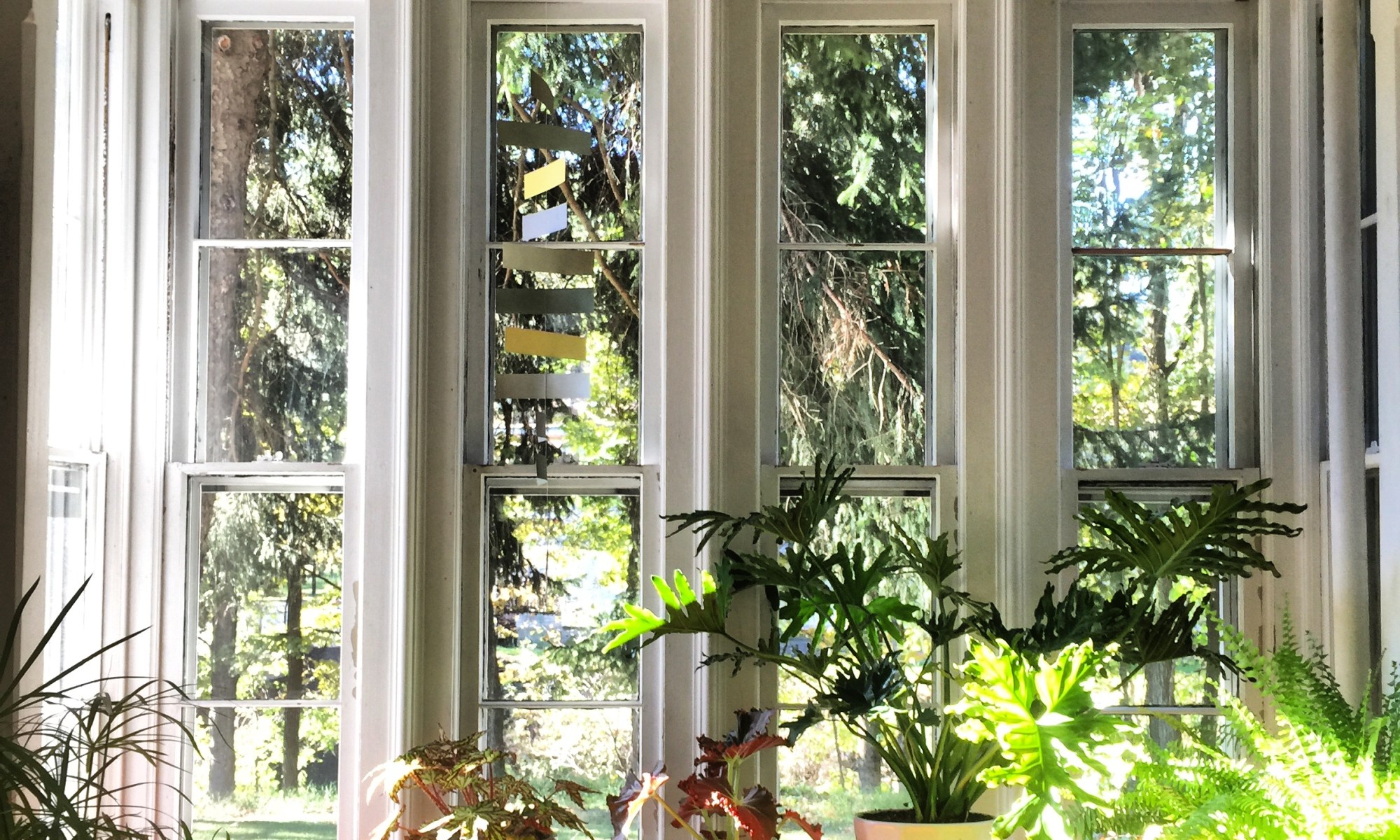
Photos in this post are from the house and grounds… I was so busy washing windows, I forgot to take photos of the process. Besides, these photos are much more fun!
During September, while Randy was working on the heating system, I was washing the storm windows. In all, there were 38 large wide glass storm windows and 24 narrow ones. When we bought the house, only a few of the storm windows were on, the others had been tucked away in various closets. We had taken them down in April so that we could wash the windows and had stood most of them together in a small storage closet off the kitchen. 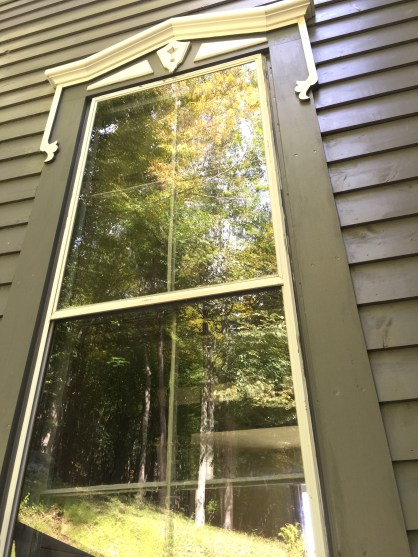 The eight panes from the two bedrooms up the narrow and steep back stairway we left up there in a closet for cleaning at some later point (This tidbit is important for reasons which I will later reveal). These large glass panes sat in storage all summer and late in August, when the first cold snap hit, I was motivated to dig them out and the washing began. First I had to carefully carry those enormous panes of framed glass out to the back yard where I used a masonry mixing troth to scrub them with warm soapy water, a sponge and a scrub brush. I even went so far as to use a Brillo pad on the rough and oxidized aluminum to bring them back to a smooth silver finish. One at a time, I lugged them from the wash basin to the table and benches we had in the side yard. There, the hose rinsed them off and the sun and wind dried them. Once dry, I carried them to the front porch to await a final cleaning, usually done the next day. One at a time, I washed each side of the glass with window cleaner, paper towels and a razor blade to scrape off all the old specks and drips of paint that had accumulated over the years. My parents sent us a package of microfiber cloths which made this final phase of cleaning easier. Then came the arduous task of putting them back up.
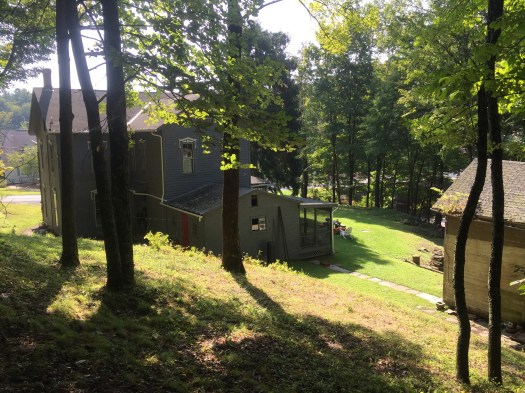 Another homeowner tip… when taking storm windows out, mark them so that you know where they go when its time to put them back up. I had to think it all through. Not only were there different heights, but widths as well. Some frames were raw aluminum, and others were painted white. It was a sorting and matching nightmare! I gave up in frustration after the first attempt, and decided to give it some time to re-consider how I was going to approach this seemingly impossible task. That first weekend, I had washed the window pains randomly, based on what was easiest to reach in the storage room. There had been a mixed variety of sizes and framing. One evening after work, I took a walk around the house to look at the windows and realized that the first floor windows were significantly taller than the rest, so the extra tall panes would fit there. Most of the first and second floor windows were the same width, but at the back of the house, the windows were all narrower. Then I noticed the runners for the storm windows were either raw aluminum or painted white, just like the frames on the panes. I had that “A-HA” moment when it all came into clarity and it was smooth sailing from there. What I did from then on was to sort the window panes before I washed them. Once matched up with others of the same width, height and finish, I could easily find where they belonged. The physical task of carrying them carefully into the house and in many cases up the stairs, was the next challenge. Not of brain power, this was a challenge of strength, dexterity, coordination and teamwork.
 At this point I needed Randy’s assistance. He would stop what he was doing in the basement, climb the stairs and jump in to do his part. He was using WD-40, a soft mallet and a bit of muscle on the actual windows, some of which had been painted shut for years. This old house has weights in the windows, many of which whose ropes had long ago dry rotted, tattered and broken off. This fact does not matter too much to us, except for the small detail that once the window is open, it will often come slamming down, if it is no longer weighted or propped open. So… one of us had to hold the window open, while the other slid the storm window into place. Otherwise, we risked having the window come crashing down on us in the midst of trying to get the storm window in. We promised each other for safety sake, we would not try to do it alone and together, we carefully slid the sparkling storm windows back into place.
 Remember the eight windows that were safely tucked away in the closet up the back stairs? Well, at some point in the last six months they were moved and placed next to a doorway up there. One night, after dark, Randy went up the back stairs for something he had stored up there. Now, there are dainty old light fixtures up there that are accessible only from pull strings, but you have to be standing directly below them to reach them. So, in the dark, on his way into one of the rooms, he bumped into the storm windows. I did not hear the crash, but I heard what came afterward. He was exhausted, stunned and infuriated. It was not a pretty scene!! There was broken glass everywhere. In the end, it looked and sounded much worse than it really was. Only three of the eight windows were actually broken. After the cleanup was complete, our local glass company was more than happy to help. In total, it took us four full weekends to complete the job, not including the first effort. In the end, every door and window has an upper and lower storm window, with the exception of just two missing panes. Best of all, no one got hurt! Between the tuned up furnace, the storm windows and the blown in insulation that was here when we bought the house, it is now free of drafts. We could feel the difference right away, just walking through the rooms, which is hard to describe… like the air is wrapped up tight around us.
 So, not only is the house warmer, but every single window has a clear and breathtaking view. The creek, the hillside and a cornfield sprawling toward the river border us on all sides. With every day the view changes, as flora, fauna and the climate transition with the times. Last weekend, Randy spied a bobcat on the move, out an upstairs window. He came bolting down the stairs, out the front door, and onto the front lawn. I happened to be returning from the Post Office next door when I saw him. We both froze, and watched it move out into the open, catch our eye and then scurry off in search of cover.
  What view will we take in next?

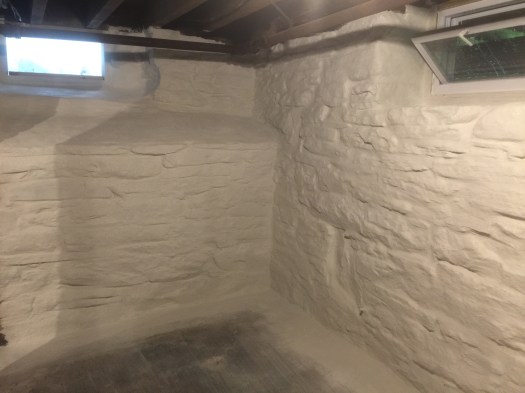
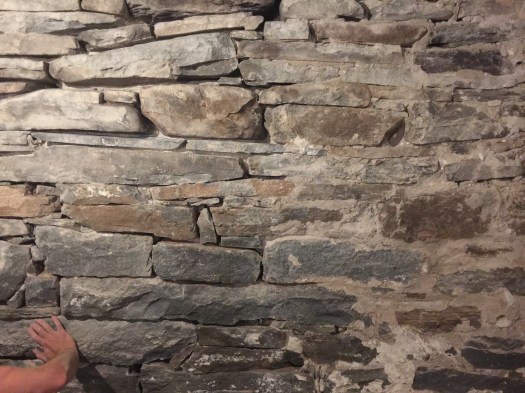 Everything we build in life needs a strong foundation. Be it our childhood development, family life, education, relationships, career, even our health. A house, of course is no different. This old house was built on stone. We were in love with the foundation from the start. Before we installed the new oil tanks we wanted to seal it with something to keep the moisture out. We were only focused on one corner, where the oil tanks stand. Simple, right? Starting with hammers and chisels, we chipped away at the crumbling limestone coating that had been applied years ago. The three foot wide walls are perfectly vertical and straight on all sides. We chipped, scraped and dug out mortar from between all the rocks, and using an air compressor blew out any dust left behind before re-pointing. I kept saying “Are you sure we should be taking out so much of the old mortar?” and Randy kept assuring me the more of the crumbly mortar we took out, the stronger the new joints would be.
 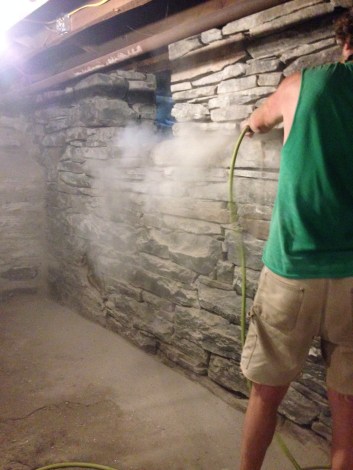 We hauled out the crumbly debris and began to mix hydraulic cement to fill in all of the spaces we had cleared. Randy found a “Marshall” mortar bag that looks like a giant pastry bag (Marshall was the name of his beloved dog). It worked like a charm and we developed a system that worked. Randy would mix the cement in a five gallon bucket with his drill, using an attachment that looks like a giant beater. I poured in the dry cement until it was just the right consistency and then we would race down the bulkhead steps. I would go first, and grab the Marshall bag out of our rinse bucket. Randy would follow me down the steps with the bucket of heavy cement. With a gloved hand, I would fill the bag while he held it open, and off he would go, squeezing that bag with every ounce of might he had. I would follow with a sponge, sealing every crevice, smoothing the cement and cleaning off the stones. Once the process was complete, we would put the Marshall bag back into the rinse bucket of water, to soften the already hardening cement and back up the steps we went. Over and over and over again.
 d Randy started in on the piping for the tanks. He was under the advisement of a local plumber who left Randy his two 24 inch monkey wrenches and a list of the supplies needed. I think Randy made a trip to the plumbing supply store once a day for about a week. Measuring, cutting, joining, leveling, cranking, adjusting and sealing until the job was done. The two tanks were joined together by a two inch pipe so that when the first tank is full, the second tank takes in the overflow. There is a two inch intake pipe with a vent pipe that is 1 and a quarter inch. Apparently this makes the filler whistle blow at a high pitch so that when the oil company fills the tank, the whistle blows to alert them that the tanks are full. Next came the coated copper fuel line, the filter and the safety shutoff valve, to connect the tanks to the furnace.
 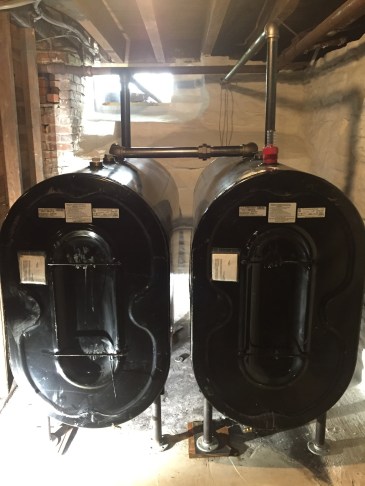 We made a few trips to a local gas station and poured in twenty gallons of home heating fuel. No leaks! On a side note, if ever transporting fuel in the back of your car, remember to place gas tanks in a spot where they won’t tip over on windy back country roads. We forgot to do this, I drove too fast and my car still has the lingering smell of diesel fuel.
 J. Howard Beach House